Case Study • Aerospace

NGSA Test Cell

The control and data-acquisition heart of a next-generation electric thrust reverser test programme

If you have a minute, take a closer look
0 A350-family aircraft flying elecTRAS
0 elecTRAS flight hours
0 nacelle actuation weight saved
0 CCS • NI partner since

Programme figures published by Collins Aerospace / RTX, July 2026. See sources below.

The Programme

Testing the future of thrust reversal

In July 2026 Collins Aerospace, an RTX business, brought its new UK Engineering Centre of Excellence in Wolverhampton to full operational status. The centre is dedicated to the design, test and certification of aircraft actuation systems, with a particular focus on elecTRAS™ — Collins' electric thrust reverser actuation system for the next generation of aircraft.

Electric actuation removes the hydraulic interfaces from the nacelle, cutting actuation weight by up to 20% at aircraft system level. The technology already has a strong pedigree: more than 15 million flight hours across 700-plus Airbus A350-family aircraft.

Proving this hardware demands a test facility that is modular and scalable — able to exercise everything from a single actuation module to a fully integrated system. That is where CCS came in.

CCS Scope

The whole machine, end to end

CCS designed and delivered the entire NGSA Test Cell — not just the software, the whole machine: high-speed, high-force servo actuation, multi-axis motion control and profiling, dynamic fault injection, fully programmable power supplies, the control cabinets, real-time data acquisition and the operator software. The lot.

It runs on our CCMachina platform (part of the CCS Toolblocs® family), with Delta Motion RMC controllers driving the high-speed, high-force motion and a Beckhoff EtherCAT layer for I/O and sequencing.

Live Schematic

Deploy, load, stow — on repeat

A simplified illustration of a thrust-reverser deploy/stow cycle under closed-loop servo control, with the load the rig applies as the actuator travels. Illustrative only.

INITIALISING…
One Rig, Three Systems

A test cell built for the whole assembly

The rig integrates independent servo test systems under a single control platform, so a component can be exercised on its own or as part of the wider assembly, and captured on one common time base.

System 01

Thrust Reverser

Closed-loop servo actuation drives the deploy/stow travel while dynamic and cross-load actuators apply representative flight loads through the cycle.

System 02

Ballscrew Testing

An electromechanical actuator station with load, position, torque, speed and angle feedback for characterising ballscrew-driven mechanisms.

System 03

Static Testing

A high-force static station for steady load-and-hold and position work, complementing the dynamic systems on the same platform.

Operator Interface

The rig at a glance

Each test carries its own live mimic — a tailored operator screen that shows only the channels that test uses, arranged to mirror the physical rig. Loads, positions, torques, speeds and targets update in real time as the test runs, so an operator can read the state of the whole assembly at a glance.

Mimics are built in a drag-and-drop editor and travel with the test, rendering identically on any station without hand-editing.
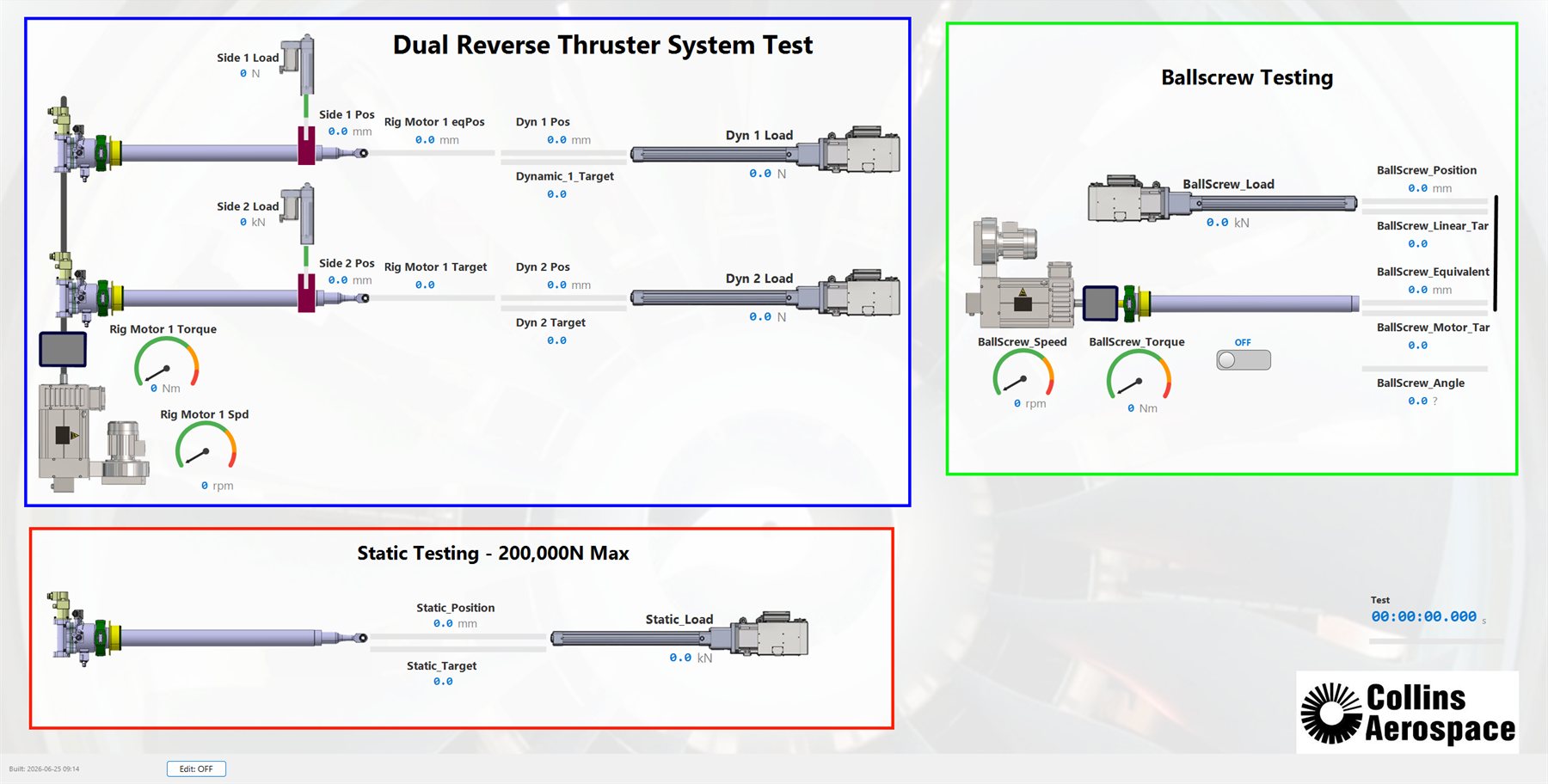
NGSA operator mimic showing the rig's three test systems with live readouts

CCMachina operator mimic — live rig overview
On Site

Designed closely with our Customer, built, installed and commissioned by CCS

From our workshop to the customer's test hall — the rig and its control system, delivered and running.

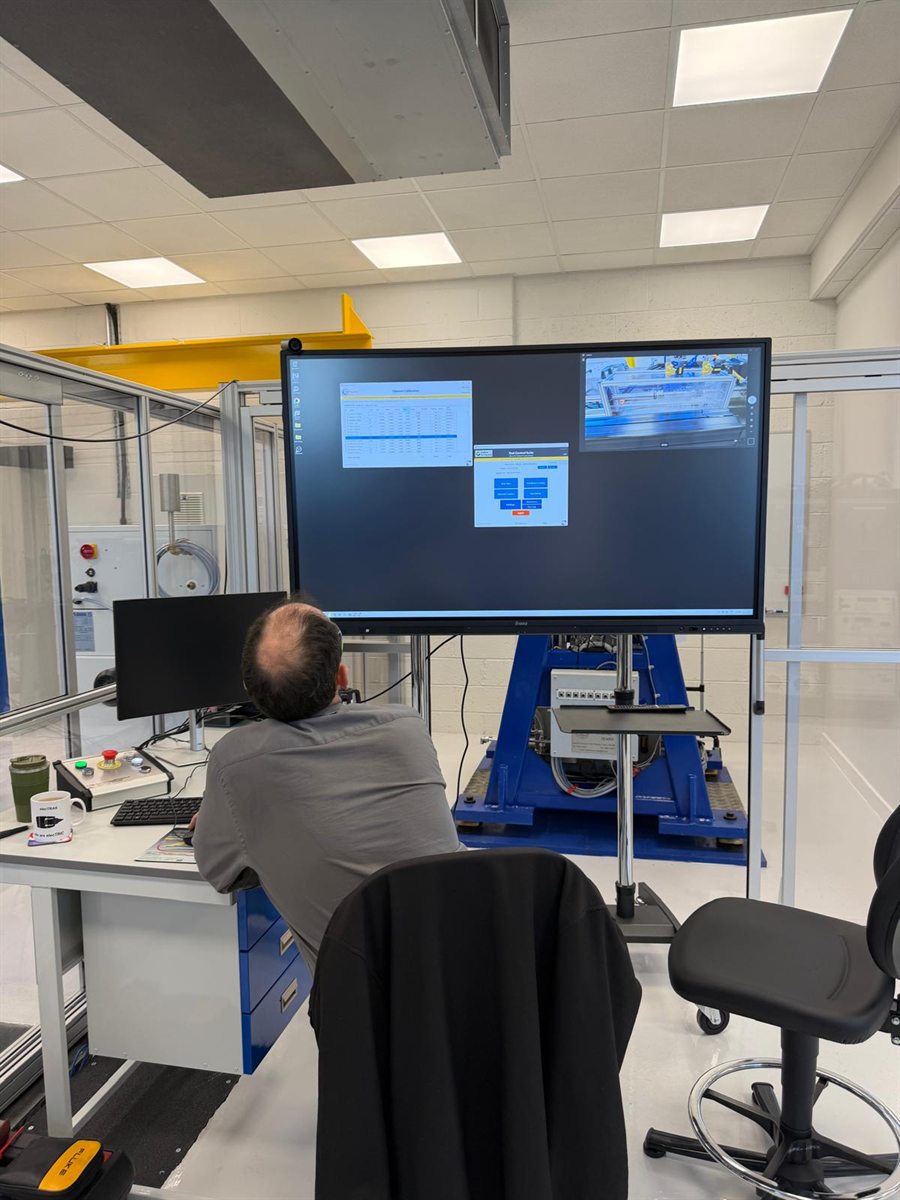
A CCS engineer operating the CCMachina software on the large test-cell display, with the rig behind
Running a test from the CCMachina operator station — the rig live behind the screen

On the floor at Wolverhampton

CCS delivered the complete test cell on site: the servo hardware, the control cabinets, and the CCMachina software that ties them together. Commissioning is done channel by channel — every sensor scaled and calibrated, every axis tuned, every trip limit proven — before a single qualification test is run.

From that point the operator works entirely through CCMachina: select a test, watch it live on the big-screen mimic and graph, and record straight to disk. What you see on the screen is exactly what the rig is doing.

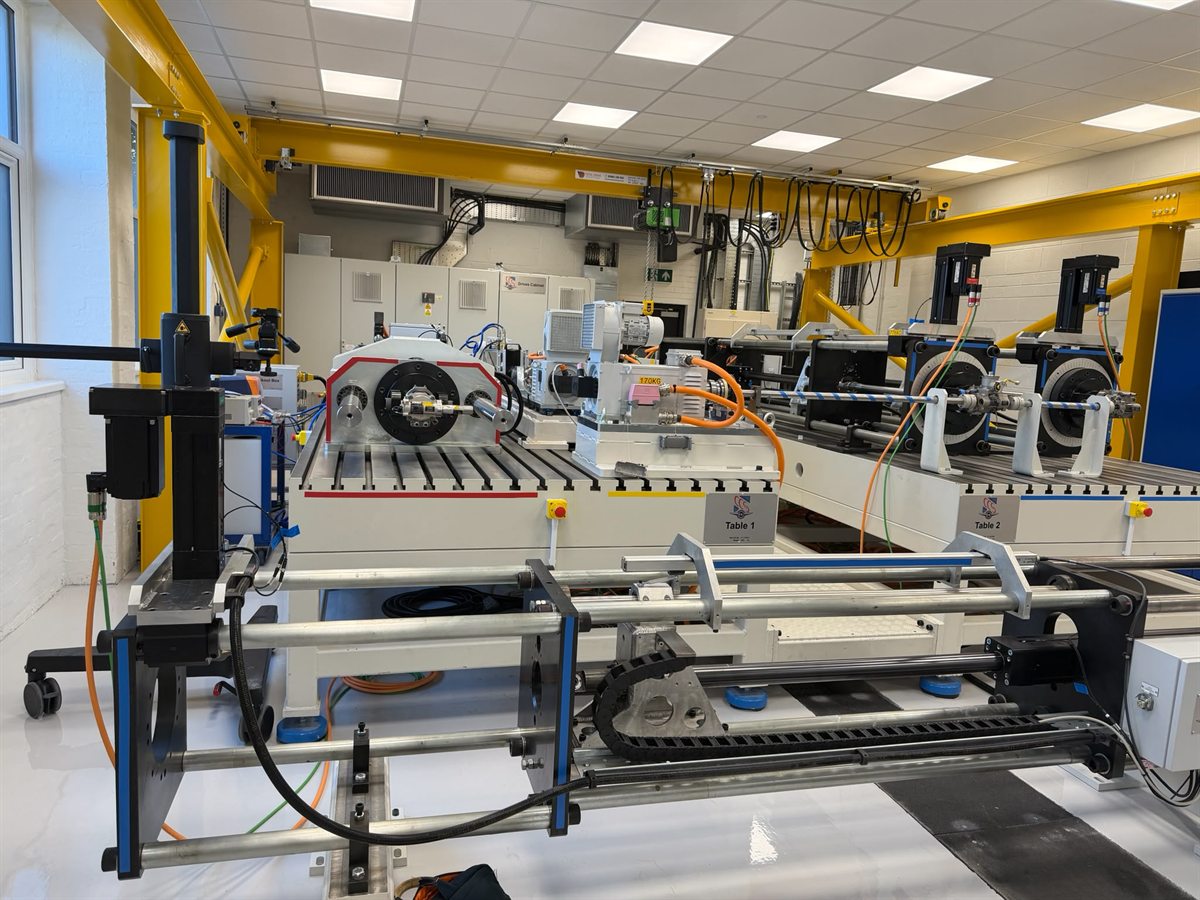
The NGSA test rig with servo actuators, fixtures and overhead gantry
Servo actuators, fixtures and overhead gantry
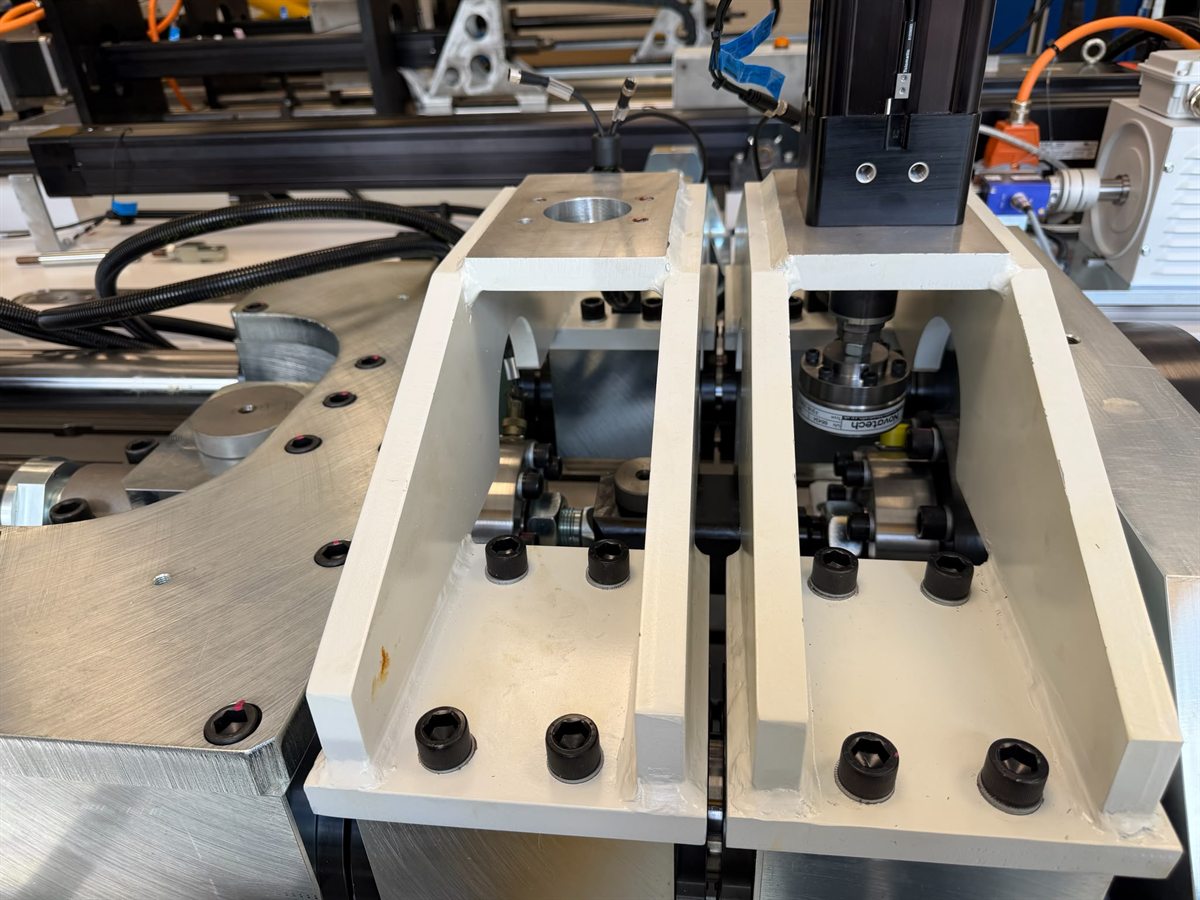
Close-up of a rotary servo actuator station on the test bed
A rotary servo actuator station
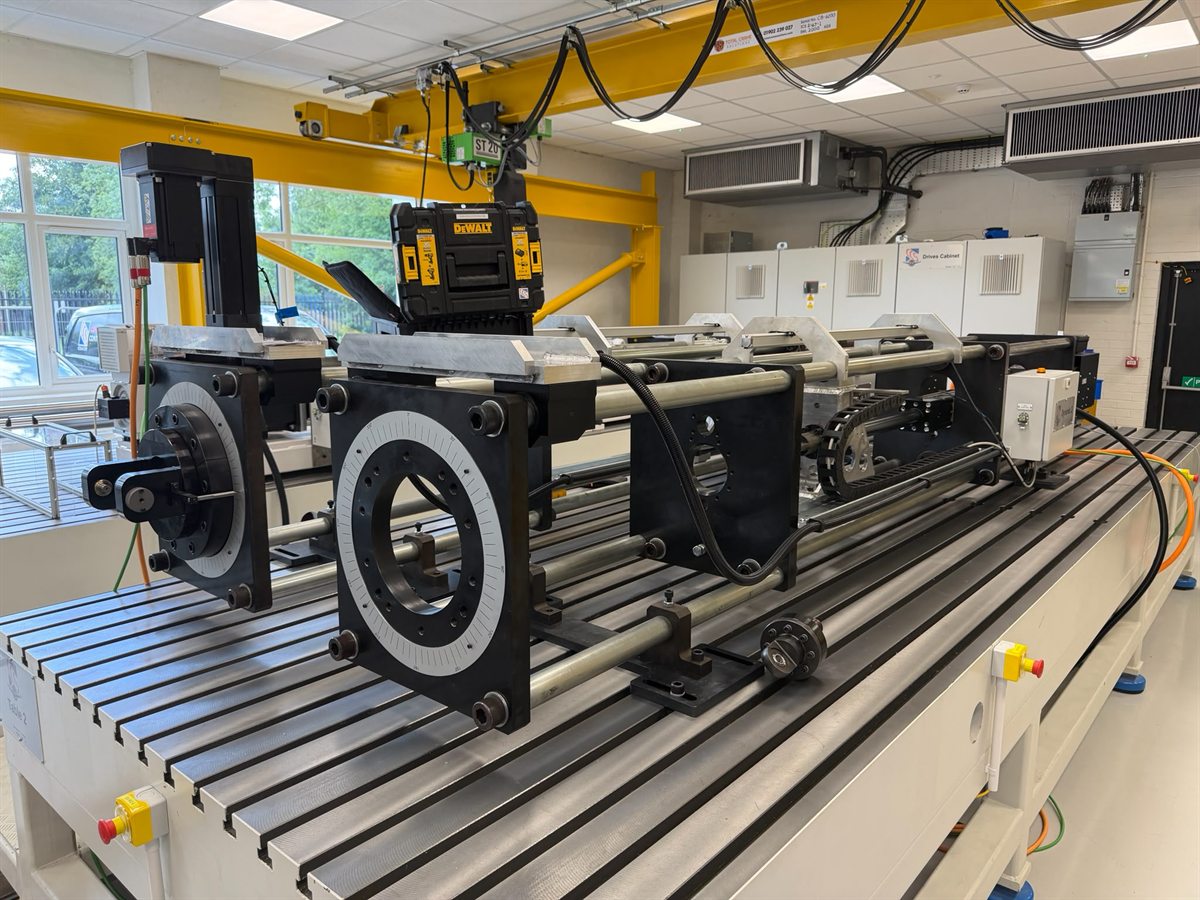
Detail of a test fixture with load frames and instrumentation
Test fixture and load frames
Built In

Dynamic fault injection & programmable power

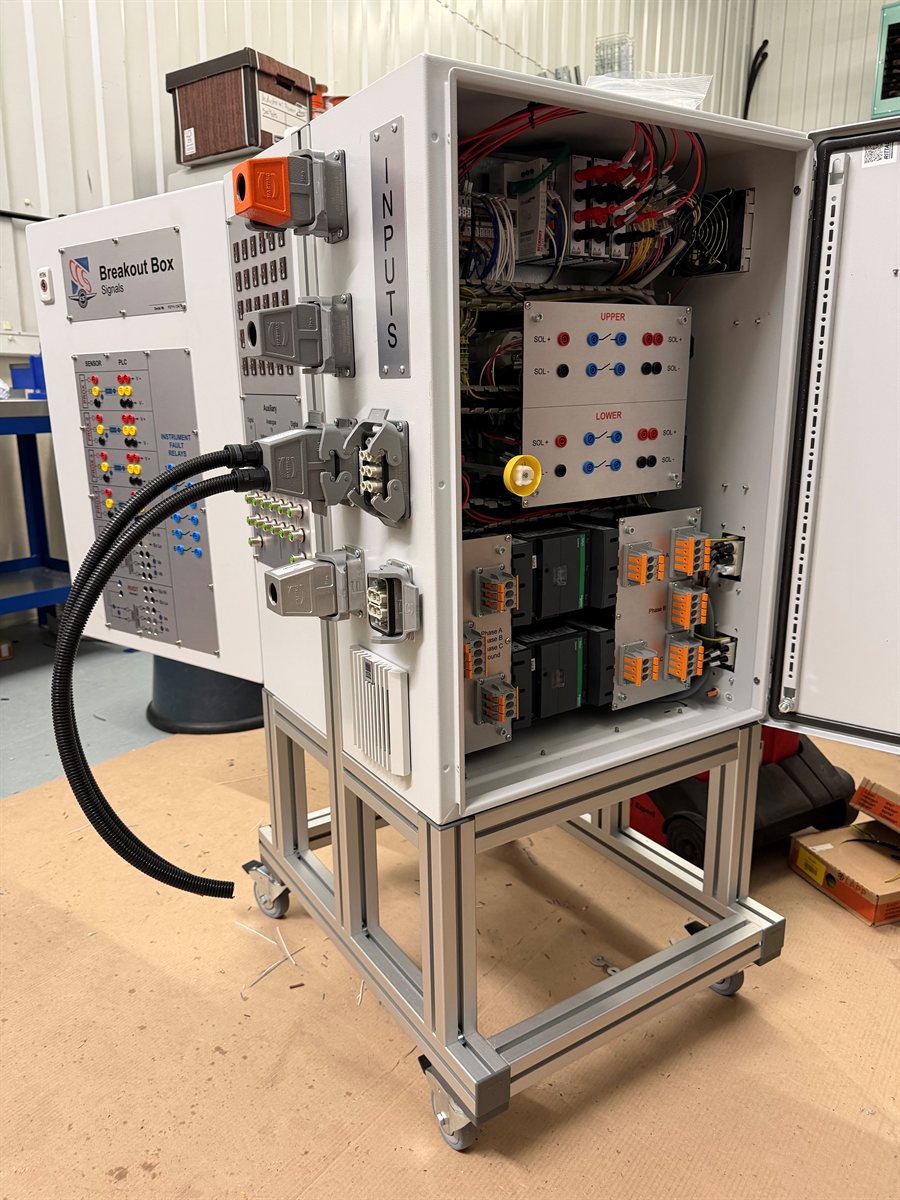
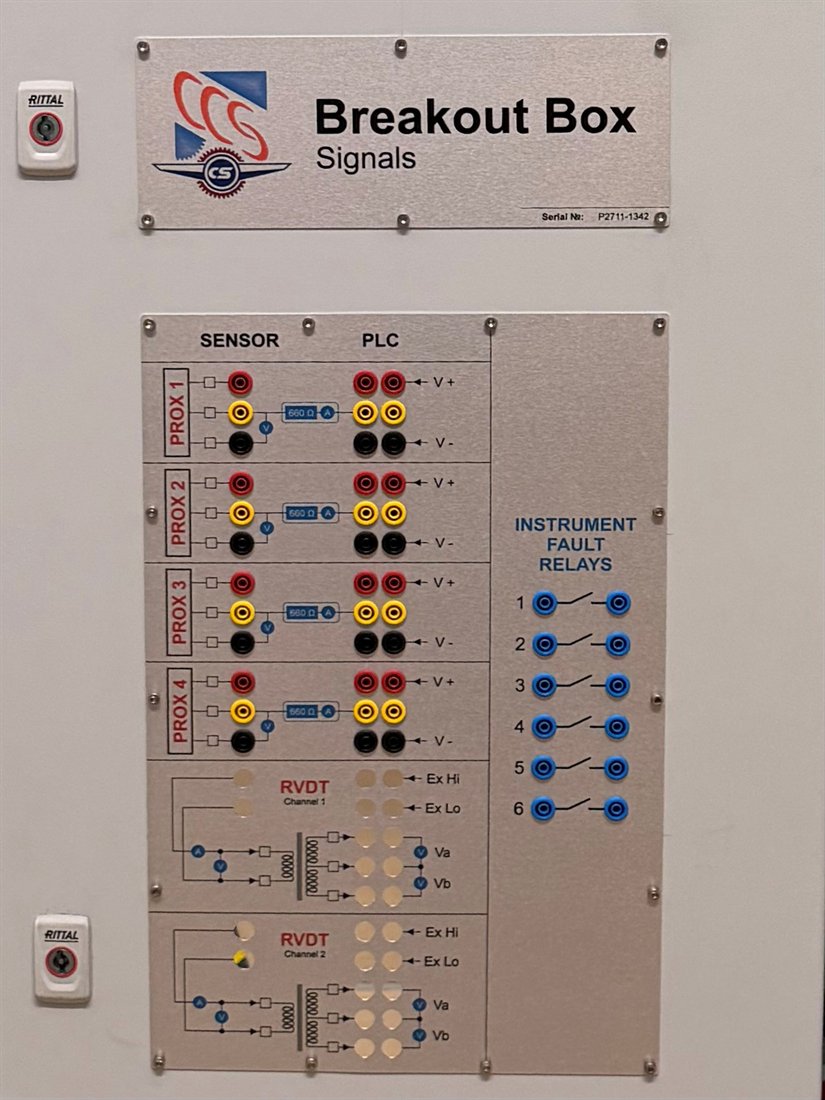
Proving a control system is not only about showing it works when everything is healthy — it is about showing it responds correctly when things go wrong. The cell has full dynamic fault injection built in: a dedicated CCS break-out box switches instrument faults into live sensor and signal lines while a test is running, so the unit under test can be exercised against real fault conditions on demand.

The rig also runs on fully programmable power supplies, so supply rails can be set, swept and disturbed under software control — brown-outs, transients and off-nominal voltages become just another part of the test profile rather than something you rig by hand.

The break-out panel sits between the sensors (proximity, RVDT and more) and the PLC, exposing every signal. A bank of instrument fault relays injects faults into individual channels mid-test — open circuit, short, and cross-wire — so the control response to each failure mode is captured and proven, not just assumed.

The CCS break-out box cabinet with signal breakout panel and internal wiring
The break-out box cabinet (BoB)
Break-out box signals panel showing sensor to PLC connections and instrument fault relays
Signals panel with switchable instrument fault relays

Photos: Computer Controlled Solutions Ltd.

Inside the Facility

Collins Aerospace's Wolverhampton test centre

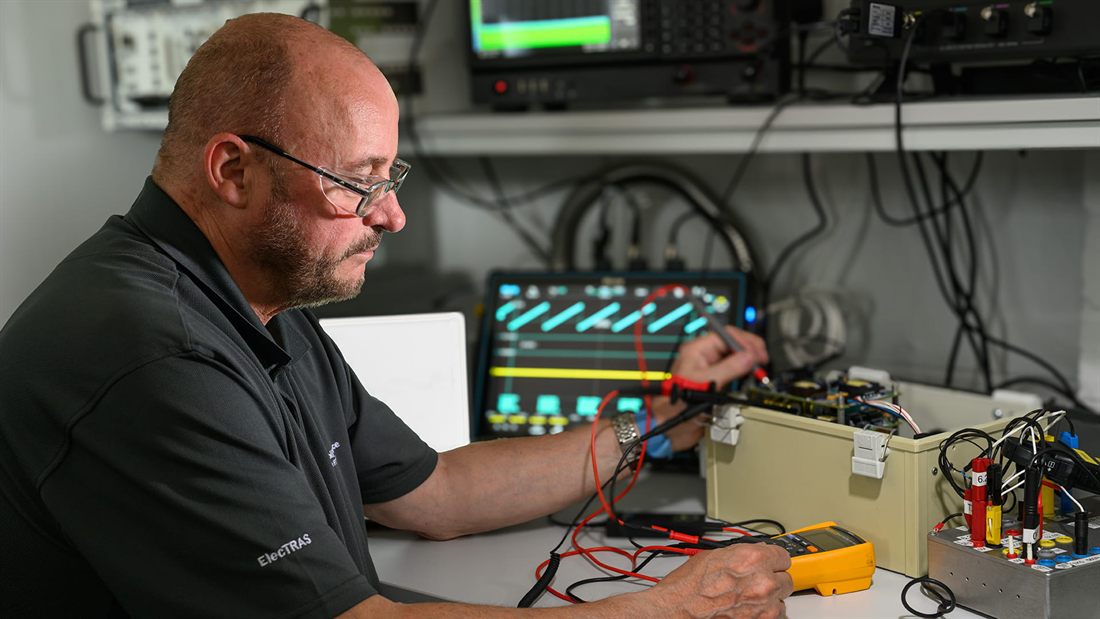
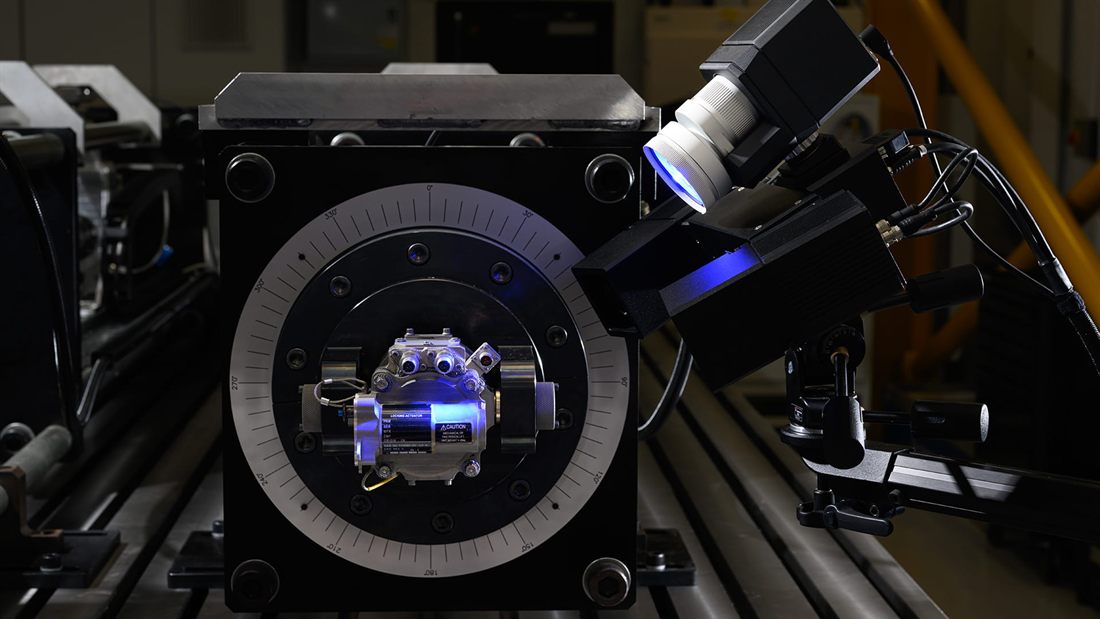
The rig our system drives, and the engineers who run it.

An elecTRAS engineer probing test electronics with an oscilloscope
A rotary test fixture with a Digital Image Correlation camera and a thrust-reverser locking actuator
Collins Aerospace engineers at the control rig cabinet

Images: Collins Aerospace / RTX.

The Software Brain

CCMachina: the software brain

At CCS the software is the most important part of the system. CCMachina turns a servo rig into a repeatable, auditable, self-documenting test instrument.

Multi-axis servo control

High-speed, high-force closed-loop motion on Delta Motion RMC controllers, integrated with a Beckhoff EtherCAT layer — electronic gearing to link axes and continuous trip-limit protection on every channel.

Visual test authoring

Engineers build test sequences step by step — moves, waits, loops, limits and operator prompts — and compose big tests from smaller reusable ones.

Motion profiles

Drive any channel along a defined curve. A built-in waveform generator and profile library make ramps, sweeps and cyclic loads repeatable across tests.

Real-time acquisition

Sample every channel at rate and record straight to the industry-standard TDMS format, readable in DIAdem, MATLAB, Python and more.

Roles & audit trail

Operator, Cal Engineer, Engineer and Administrator tiers gate what each user can do, with calibration and maintenance sign-off logged for traceability.

Live web dashboard

Scan a QR code to watch the test from a phone or tablet on the network — live chart, channel readouts, rig state and trip status from across the room.

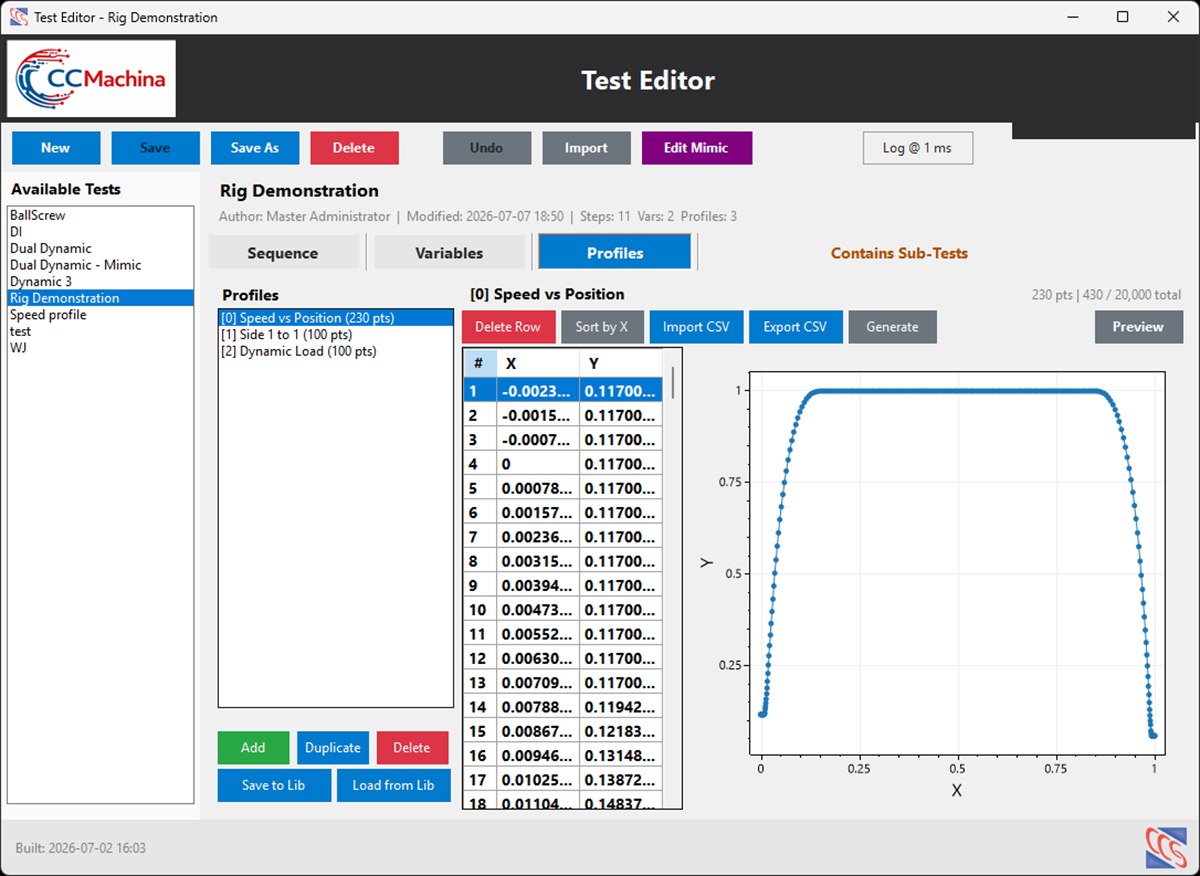
CCMachina — Test Editor · Profiles
CCMachina Test Editor Profiles tab: an X/Y point table with a live curve chart

Repeatable by design

Every profile, limit and sequence is defined once and replayed exactly, so a test run today matches one from six months ago. Motion profiles are edited as X/Y point tables with a live chart — import from CSV, generate standard shapes, or shape a curve by hand — and shared between tests through a common profile library.

Motion Control Partner

High-speed, high-force motion: Delta Motion RMC

The rig's high-speed, high-force multi-axis motion and profiling is delivered with Delta Motion RMC motion controllers. CCS is the UK supplier of Delta Motion, and in our experience they are the best available for high-speed, high-force, multi-axis motion control and profiling.

Visit Delta Motion →
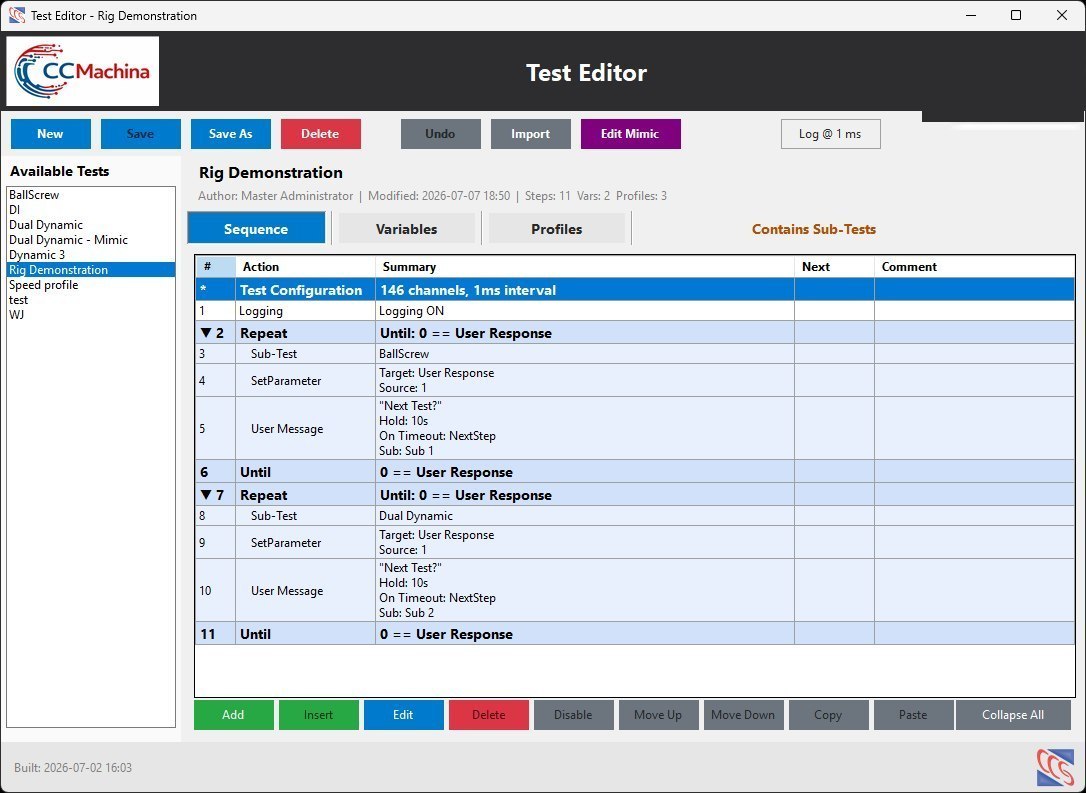
CCMachina — Test Editor · Sequence
CCMachina Test Editor showing a test sequence built from sub-tests

Visual test authoring

Engineers build a test as a readable sequence of steps — moves, waits, loops, limits and operator prompts — and compose large tests from smaller reusable ones. The whole procedure is legible at a glance and travels with the test.

Why CCS

Three decades of test & control engineering

CCS has been building test rigs, data acquisition and control systems for aerospace, automotive and energy since 1994 — from portable field instruments to full computer-controlled servo systems. The NGSA Test Cell brings that experience to one of the most demanding programmes in the industry.

Software-centric

A common, proven software suite across research, qualification and production — not a one-off build.

Real-time control

Beckhoff, Delta Motion and NI FPGA expertise for deterministic, safety-conscious servo control.

Data you can trust

Calibrated channels, standard file formats and a full audit trail from first move to final report.

Sources

Published references

Programme details on this page are drawn from Collins Aerospace / RTX public announcements.

elecTRAS™ is a trademark of Collins Aerospace. Toolblocs® is a registered trademark of Computer Controlled Solutions Ltd. This page describes CCS's own test and control system; it does not disclose customer design data.

Project Partners

Built with the best in motion & control

The NGSA Test Cell brings together CCS software and control with best-in-class motion and automation hardware.

Have a demanding test programme?

Call us on +44 (0)1926 485532 or email [email protected]

Contact Us